
Tank Lining Heat Cure — Mobile, Documented, Manufacturer-Compliant
If your tank lining spec requires heat cure, Gulf Coast Combustion provides it on-site — right where the coating was applied, anywhere in the U.S. Mobile gas combustion equipment, manufacturer-specified temperature ranges from 200°F to 400°F+, and full strip chart documentation before we leave.
We’ve run tank lining heat cure jobs at food processing facilities, breweries, and industrial plants across the country — California, Tennessee, New York, and across the Gulf Coast. We work alongside coating applicators as a subcontractor and directly with facility maintenance teams. Multiple tanks in a single visit reduces mobilization cost significantly.
Your Tank Back in Service in Hours, Not Days
Most high-performance epoxy and novolac lining systems can cure at ambient temperature — given 5 to 14 days. For facilities that can absorb that downtime, ambient cure works. For facilities that can’t, heat cure is the answer.
Ambient cure — 5 to 14 days
Tank out of service. Lost production. Schedule pressure. And still no documentation that the cure met the manufacturer’s spec.
GCC heat cure — single on-site visit
Controlled ramp to manufacturer-specified temperature. Hold. Cool-down. Documentation in hand. Tank back in service the same day or next day.
For a food plant running on a production schedule, a winery in active season, or an industrial facility with a tight turnaround window — the difference between 10 days of downtime and one on-site visit isn’t just convenient. It’s a production decision.
This work has taken Gulf Coast Combustion to California, Tennessee, New York, and across the country. If your facility needs heat cure — wherever you are — we mobilize. And if you have multiple tanks scheduled for relining, coordinating them in a single visit significantly reduces mobilization cost. Call James at 832-797-3428 to talk through your timeline and get a quote.
What Is Tank Lining Heat Cure — and Why Does It Require a Specialist?
Many high-performance tank lining systems — epoxy phenolics, novolac epoxies, and specialty polymer coatings like ChemLINE 784 — cannot achieve full chemical resistance at ambient temperature. The manufacturer’s data sheet specifies a heat cure cycle: a target temperature, a ramp rate, a hold time, and in some cases multi-point surface temperature monitoring requirements.
For large fixed tanks that can’t be moved — storage tanks, process vessels, food-grade tanks in active facilities — that heat cure has to happen on-site. A portable construction heater or a forced air blower pointed at a manway doesn’t meet the manufacturer’s spec. It doesn’t provide uniform temperature distribution across the tank shell. And it produces no documentation.
Gulf Coast Combustion runs controlled heat cure cycles using the same high-velocity gas combustion equipment and thermocouple monitoring we use for pressure vessel PWHT — dialed down to the manufacturer’s specified temperature range, with strip chart documentation of every phase. See how GCC executed a ChemLINE heat cure on four vertical tomato paste tanks at a major food processing facility in California: ChemLINE Heat Cure — Food Processing Facility Case Study →
Coating Systems That Require Heat Cure
The following coating systems specify heat cure on their product data sheets. GCC’s equipment covers the full temperature range across all of them:
| Coating System | Manufacturer | Heat Cure Temp | Application |
|---|---|---|---|
| ChemLINE 784 / 784 WS | Advanced Polymer Coatings | 200–250°F | Food/bev tanks, wineries, chemical vessels |
| ChemLINE 784 ES | Advanced Polymer Coatings | 350°F+ | Chemical processing, aggressive service |
| Interline 994 | AkzoNobel / International | Mandatory heat post-cure | Chemical storage, crude oil, rail cars |
| PPG Novolac / Novaguard Series | PPG Protective & Marine | Ramp 2°F/min, multi-point monitoring | Oil & gas, rail, process vessels |
| Intertherm 228HS | International Protective Coatings | Heat cure required | High-temp corrosive environments |
| Epoxy phenolic systems (general) | Various | 350–400°F | Tank linings, immersion service, brine/crude oil |
Always verify cure requirements against the manufacturer’s current product data sheet. Specifications vary by product version and service environment. James can review your spec before mobilizing.
Who Works With GCC for Tank Lining Heat Cure
Coating Applicators & Turnaround Contractors
You apply the coating. We provide the heat source.
If you’re a coating applicator or industrial turnaround contractor doing large fixed tank work — food plants, refineries, chemical facilities — and your spec requires heat cure, Gulf Coast Combustion is the subcontractor you call. We mobilize to the job site with our own equipment, run the cure cycle to the manufacturer’s spec, and hand you the documentation before we leave.
No equipment rental. No portable heaters that can’t document the cycle. A controlled, documented heat cure from a specialist who runs controlled temperature cycles every day.
Facility Maintenance Managers & Plant Operators
Your tank lining spec requires documented heat cure. We provide it.
Food processing facilities, wineries, breweries, and industrial plants operating under FDA, USDA, or strict internal quality standards need more than just “we heated it.” You need a strip chart, a calibration certificate, and documentation that the cure was performed per the manufacturer’s spec.
Gulf Coast Combustion delivers that documentation package on every job. Call James directly at 832-797-3428 to discuss your next tank relining project.
Industries We Serve
Food & Beverage
Food processing plants, wineries, breweries, distilleries, juice production — FDA/USDA-compliant heat cure with full documentation.
Oil & Gas / Petrochemical
Storage tanks, process vessels, crude oil immersion service — epoxy phenolic and novolac systems requiring elevated temperature cure.
Chemical Processing
High-performance lining systems for aggressive chemical service — ChemLINE ES, epoxy novolac, and specialty polymer coatings.
Water & Wastewater
Epoxy-lined clarifiers, digesters, and large fixed tanks requiring controlled cure cycles for long-term corrosion protection.
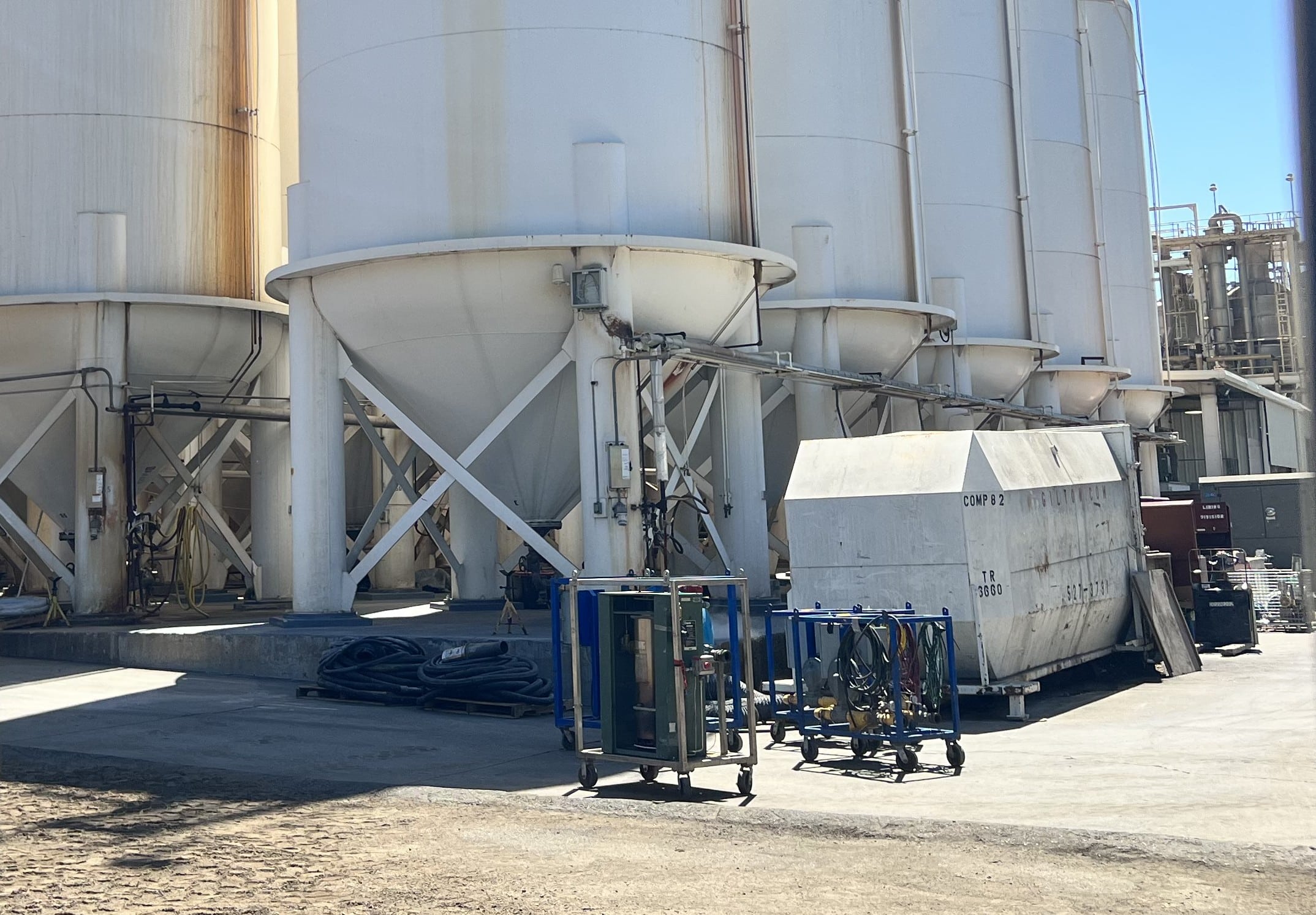
On-site ChemLINE tank lining heat cure on 20 ft diameter food storage tanks at a central California food processing facility — brought to a 250°F cure right where the tanks sat.
How GCC Runs a Tank Lining Heat Cure
The process mirrors what we do on pressure vessel PWHT jobs — controlled ramp, hold, and cool-down, with thermocouple monitoring and strip chart documentation throughout:
Review the manufacturer’s cure spec
Before mobilizing, James reviews the product data sheet — target temperature, ramp rate, hold time, and any multi-point monitoring requirements. The execution plan is built around the manufacturer’s spec, not a generic cure cycle.

Mobilize with combustion equipment
GCC brings mobile gas combustion equipment to the job site. No rental heaters. No improvised setup. The same high-velocity burner systems we use for large pressure vessel PWHT — run at the temperature range your coating requires.

Monitor with Type K thermocouples
Thermocouples placed at multiple points — top, bottom, and cardinal directions — to verify uniform temperature distribution across the tank shell. Exactly what PPG and other manufacturers specify in their data sheets.

Deliver documentation before we leave
Strip chart recorder trace showing ramp, hold, and cool-down. Calibration certificate. Written execution plan. Complete documentation package in your hands before GCC trucks leave the yard.

More From Gulf Coast Combustion
Gulf Coast Combustion also performs refractory dry outs, localized PWHT, and in-house furnace heat treating for smaller components.
Primary Service
On-Site Pressure Vessel PWHT — GCC’s Core Specialty
Tank lining heat cure uses the same mobile combustion equipment and documentation standards as our pressure vessel PWHT work. Learn more about GCC’s primary service.
View Vessel Heat Treating →Looking for refractory dry out? That’s a different process — controlled cure cycles for refractory linings in vessels, process heaters, and industrial equipment.
Read the Complete Refractory Dry Out Guide →Ready to Get Started?
Talk to James About Your Next Tank Lining Job
Call or text the owner directly at 832-797-3428 — or reach the office at 713-425-3773.
