

THE FABRICATOR’S COMPLETE GUIDE TO PRESSURE VESSEL PWHT
Jump to a Section: Introduction — What Is Pressure Vessel PWHT and Why It Matters Section 1 — What Is Post Weld Heat Treatment? Section

Anyone Can Own the Gas-Fired Equipment. Not Everyone Can Cook a Vessel.
On-site post weld heat treatment looks like a commodity. Same code, same target temperature, similar-looking equipment on every truck that pulls into the yard. That

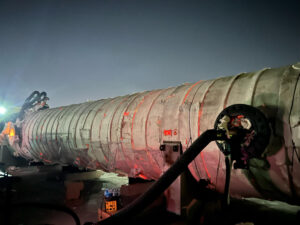
Tank Lining Heat Cure at a Major Food Processing Facility — California
ChemLINE heat cure isn’t a passive process. High-performance coating systems like ChemLINE require a controlled temperature ramp to a substrate temperature of 250°F, held for
Looking for a Heat Treating Furnace for Your Pressure Vessel? Read This First
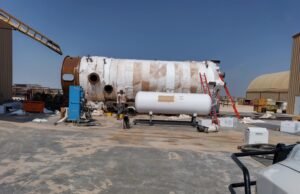
If you’re searching for furnace PWHT for a large pressure vessel, on-site direct gas fire is probably the better option. No transport. No size limits.

The On-Site PWHT Bid Is the Final Number. Here’s Why That Matters.
On-site PWHT pricing isn’t always what it looks like. When a fabricator gets a freight quote to ship a large pressure vessel to a heat
We Just Published Our PWHT Pricing. Here’s Why We’re the First.
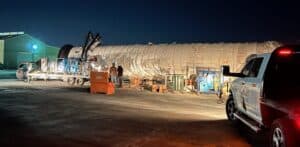
What the Calculator Actually Does The GCC PWHT Pricing Calculator is built on GCC’s actual job cost structure — the same inputs James uses when
On-Site PWHT Execution Standards: James Benefield in Thermal Processing
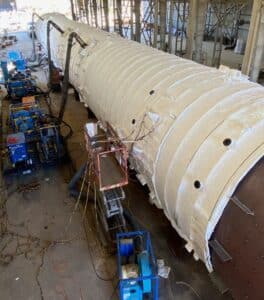
Thermal Processing magazine published a technical article this week by James Benefield, owner of Gulf Coast Combustion, on the execution standards for on-site direct gas

What Engineers Actually Want to Know About On-Site Pressure Vessel PWHT
A photo of a 55-foot pressure vessel at 1,150°F made its way onto a major engineering community online. Within 24 hours: 503 upvotes, 70+ comments,

On-Site vs. Shop Furnace PWHT — Why Smart Fabricators Choose Mobile Heat Treating
We don’t transport the vessel to a furnace. We turn it into one. A complete breakdown of on-site vs. shop furnace PWHT — cost, transport risk, size limits, schedule control, and documentation. Everything fabricators need before they choose.
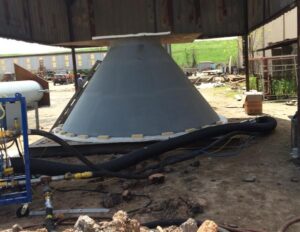
What Happens If You Rush a Refractory Dry Out
Refractory lining is expensive. The installation labor alone makes it one of the higher line items on any heater or vessel turnaround. The dry out
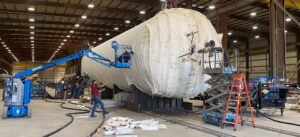
About to Ship a Pressure Vessel for Heat Treatment? There’s Another Option.
You’ve got a vessel ready for furnace PWHT. You’re calling furnace shops, getting freight quotes, checking schedules. That’s the process most fabricators run — because
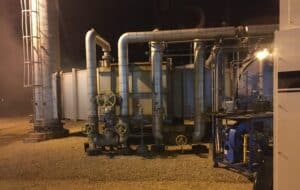
Refractory Dry Out: The Complete Guide for Fabricators and Plant Managers
Jump to a Section: Introduction — What Is Refractory Dry Out and Why It Matters Section 1 — What Is Refractory Dry Out? Section 2
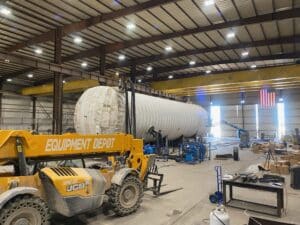
How Long Does On-Site Pressure Vessel PWHT Take?
If you’ve ever wondered how long on-site pressure vessel PWHT takes, here’s the straight answer: for most jobs, Gulf Coast Combustion is on your floor
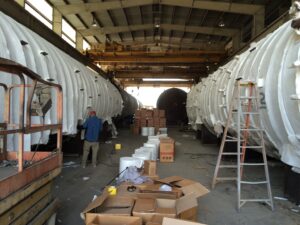
What 10 Years With the Same Client Actually Looks Like
The first time one of our longest-running clients saw on-site pressure vessel PWHT, he didn’t describe it in technical terms. He said it looked like
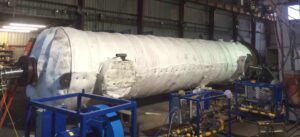
5 Questions to Ask Before You Hire a Mobile Heat Treating Company
Not all mobile heat treating companies are created equal. For pressure vessel fabricators, choosing the wrong vendor can mean schedule delays, execution problems, or a
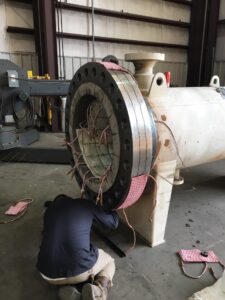
Localized PWHT: Pipe Spools, Nozzle Welds, and Vessel Repairs
Pipe spools, flange faces, nozzle welds, and seam weld repairs all require post weld heat treatment on a specific area — not a full vessel
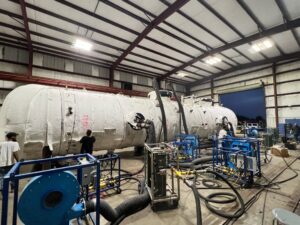
Pressure Vessel PWHT by Vessel Type: What Fabricators in Oil & Gas and Petrochemical Need to Know
Pressure Vessel PWHT by Vessel Type: What Fabricators in Oil & Gas and Petrochemical Need to Know If you fabricate pressure vessels for oil &
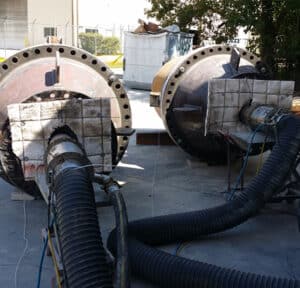
Refractory Dry Out Failure: Why Getting It Right the First Time Matters
Refractory lining is a significant investment — in materials and in the labor to install it. The dry out process is the final step before
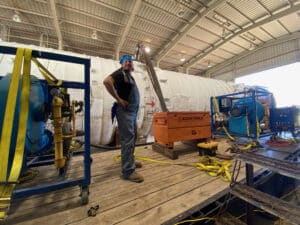
Why the Best Pressure Vessel Fabricators Don’t Shop for a New Heat Treating Vendor Every Year
There’s a particular kind of fabrication shop that stands out in the pressure vessel heat treating world. Their work is precise. Their timelines are tight.
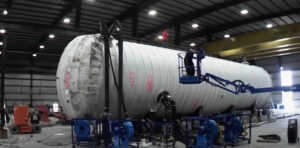
Direct Gas Fire Heat Treating: What It Is and Why Fabricators Choose It
Most fabricators picture a box furnace or ceramic pads when they think about heat treating. Gulf Coast Combustion uses something different — high-velocity direct gas

Why Rising Oil Prices Favor On-Site PWHT
If you’re a pressure vessel fabricator who relies on an outside furnace for PWHT, you’re probably already feeling the pressure of rising transportation costs —

PWHT Requirements Under ASME Section VIII
If you fabricate pressure vessels, post weld heat treatment (PWHT) isn’t optional — it’s a code requirement driven by ASME Section VIII, Division 1. But
Post Weld Heat Treating: Can It Be Done On-Site?
Yes. Post weld heat treatment can absolutely be done on-site — and for large, heavy pressure vessels, it’s almost always the right call. Gulf Coast

Heat Treatment Equipment — Gas Train & Burner Systems
When Gulf Coast Combustion shows up on a job site, the heat treatment equipment setup is what the industry calls gas train equipment. It’s the
Time Lapse of on-site PWHT pressure vessel
Watch Gulf Coast Combustion perform on-site pressure vessel heat treating from start to finish — captured in a 90-second time-lapse at a customer location. This
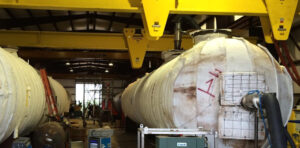
Insulation use in industrial heat treating
Thermal insulation is a critical component of every on-site pressure vessel heat treating job. In industrial heat treating, the term refers specifically to glass fiber
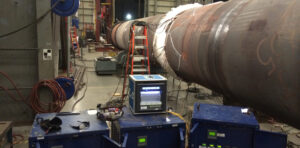
Localized PWHT of Pipe Spools
When you need quick turnaround on your piping project, Gulf Coast Combustion provides solutions on projects large or small. From start to finish, we provide everything you
