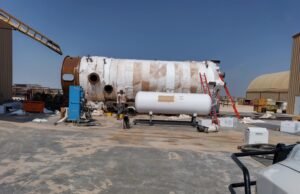

On-site PWHT pricing isn’t always what it looks like. When a fabricator gets a freight quote to ship a large pressure vessel to a heat treating furnace, the number looks straightforward. It rarely stays that way.
Fuel surcharges get added. Crane availability changes. The furnace has a longer queue than expected. The return trip has to be rescheduled. By the time the final invoice arrives, it doesn’t match the original quote — and nobody is surprised, because that’s how transport logistics work.
The number James quotes is the number on the invoice. No transport variables. No permit costs. No crane surprises at either end. Here’s what goes into that difference.
As Featured In
Thermal Processing Magazine — The Industry’s Leading Heat Treating Publication
Gulf Coast Combustion owner James Benefield breaks down the execution standards behind every large vessel PWHT job — written execution plan, thermocouple placement, heat cycle calculations, and full documentation.
Read the Technical Article
On-Site PWHT Pricing
See What Your Job Costs — Instantly.
Enter your vessel specs and get a budgetary estimate in seconds — built from GCC’s actual job data. No email required.
Try the Free Calculator →One Call. One Number.
Long-term GCC clients don’t manage PWHT logistics. They call James, approve the bid, give a date, and get back to building. No carrier coordination. No permit applications. No crane scheduling at two locations. No furnace queue. No return trip to arrange.
That’s not a small thing. Coordinating transport for a large pressure vessel — permits, pilot cars, route surveys, crane at both ends, a furnace shop on someone else’s timeline — takes real hours from a project manager’s week. With GCC, those hours go back to running their shop.
The actual heat treating takes typically 2–3 days on site — same as it would at a furnace once you factor in transport time at both ends. The difference is everything that happens before and after. With GCC, that’s one call.
Free Resource
The Fabricator’s Complete Guide to Pressure Vessel PWHT
Everything you need to know about on-site pressure vessel PWHT — code requirements, execution standards, heat-up and cool-down rates, thermocouple placement, and how to evaluate a heat treating contractor.
Read the Full GuideAny Pressure Vessel Is an Oversize Load
In Texas, a vehicle or load exceeding any one of four thresholds requires an oversize or overweight permit before it can move:
| Threshold | Limit | Permit Required? |
|---|---|---|
| Width | Over 8’6″ (102 inches) | Yes |
| Height | Over 14′ | Yes |
| Length | Over 65′ total combination | Yes |
| Gross weight | Over 80,000 lbs | Yes |
Most pressure vessels that require PWHT exceed the width limit before anything else is considered. A vessel with an 84-inch diameter clears the threshold. A vessel at 120 inches, 144 inches, or 180 inches clears it by a significant margin.
Gulf Coast Combustion handles everything else — the execution procedure, equipment, thermocouple placement, insulation, and full documentation before the crew leaves your yard.
On-Site PWHT Pricing vs. Furnace Transport: The Cost Variables That Don’t Show Up
A freight quote is a snapshot. Diesel prices move. Carrier rates change. Crane availability fluctuates. The furnace shop’s queue is not your queue to manage. None of these variables are in the original number — they show up later.
| Cost Item | Ship to Furnace | On-Site with GCC |
|---|---|---|
| Base PWHT cost | Furnace rate (per lb or flat fee) | Fixed bid |
| Freight to furnace | Variable — fuel surcharge applies | None |
| Freight return | Variable — quoted separately | None |
| Crane/rigging at origin | Variable | None |
| Crane/rigging at furnace | Variable | None |
| Oversize permits | $60–$500+ per trip | None |
| Pilot cars | Per-day escort fees — required on most oversize moves | None |
| Route survey (superloads) | Required for heavy or oversized loads on certain routes | None |
| Transit damage risk | Real — finished vessel in motion | None |
| Quote validity | ~30 days | 6 months |
| Final bill vs. original quote | Often higher | Same |
| Get an instant estimate | Not available | PWHT Pricing Calculator — enter your specs, get a range in seconds |
GCC’s bids are valid for six months. A project manager can lock in the PWHT cost months before the job is scheduled and know that number holds. No fuel surcharge clause. No “market conditions have changed” conversation the week before mobilization.
Gulf Coast Combustion has been executing on-site direct gas fire PWHT since 2014. The process is documented, the crew is certified, and the equipment is sized for large vessels. For a full breakdown of how on-site PWHT works and what to expect from a contractor, see The Fabricator’s Complete Guide to Pressure Vessel PWHT.
Full Comparison
On-Site PWHT vs. Off-Site Furnace — The Full Breakdown
Cost, schedule, risk, documentation — every factor compared side by side for large pressure vessels.
Read the Full Comparison →See an On-Site PWHT Job in Action
Heat distribution, soak temperature, and chart recorder — an 80-foot, 90,000 lb job walked through in real time.
We show up when we say we will. The documentation is in your hands before we leave. The bid is the final number.
If you want a starting point before you call, use the GCC PWHT Pricing Calculator — enter your vessel specs and get an estimated range in seconds. No email required. Need it done fast? Gulf Coast Combustion mobilizes same-day and next-day when the schedule demands it.
Ready to Get Started?
Talk to James About Your Next Project
Call or text the owner directly at 832-797-3428 — or reach the office at 713-425-3773.