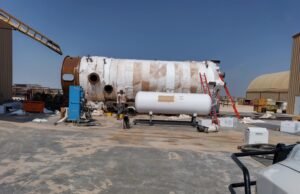

On-site post weld heat treatment looks like a commodity. Same code, same target temperature, similar-looking equipment on every truck that pulls into the yard. That impression is the trap. Choosing an on-site PWHT contractor isn't really a decision about equipment or price. It's a decision about whether the people running your vessel actually know the work. The gap between a real specialist and someone with the same gear doesn't show up as a slightly worse result. On a pressure vessel, it can show up as a damaged vessel, a blown schedule, and a costly problem that follows you all the way to your own customer.
Here's how to think about it.
What to Look For in an On-Site PWHT Contractor
Before the deep dive, here's the short version. Five things are worth checking on any vessel job, and what a strong answer to each one actually looks like.
| What to check | What a strong answer looks like | Why it matters |
|---|---|---|
| Vessel experience | Years of on-site PWHT on vessels your size, not general heat treating. | Field judgment on large vessels only comes from repetition. |
| Thermocouple placement | Readings that represent the whole vessel, not just the accessible spots. | Uneven monitoring hides cold zones the chart won't show. |
| Accountability | A named person answerable for the job, ideally the owner. | Someone whose reputation rides on the result. |
| Documentation | Heat treat record, strip chart trace, calibration certificate, execution plan. | Your proof the work met code. |
| Method fit | The right approach for your vessel's size and geometry. | One size doesn't fit a 16-ft and a 140-ft vessel. |
The rest of this post is why each of these matters more than it looks like it should.
The Equipment Is the Easy Part
Gas-fired combustion PWHT is straightforward to describe and difficult to do well. You bring the vessel up to soak temperature, hold it, and bring it back down, all within tight limits on how fast the steel can heat and cool and how far the temperature can vary across the vessel at any moment. Miss those limits and you don't relieve the residual stress the way the code requires. Worse, you can introduce new problems into steel that was fine before you started.
Owning the burners, the gas trains, the recorders, and the insulation doesn't make any of that happen correctly. The equipment is available to anyone willing to buy it. What isn't available off the shelf is the field judgment to run it right on a large vessel:
Where the heat wants to go
Reading how a specific vessel will heat before the first burner lights, not after a cold spot shows up on the chart.
How the steel behaves as it expands
Knowing what the vessel does under thermal load so the cycle works with the steel instead of fighting it.
Where to place thermocouples
Positioning them so the readings represent the whole vessel, not just the spots that are easy to reach.
How to hold uniform temperature end to end
Keeping the whole vessel in tolerance down its full length, whether that's 60 feet, 100 feet, or 140.
That judgment comes from doing the work, over and over, for years.
Before You Call
Read the Industry's Most Complete Guide to Pressure Vessel PWHT
Written by James Benefield. Everything a fabricator or plant manager needs to know about the process, code requirements, and what separates a job done right from one that isn't.
Read the Complete PWHT Guide →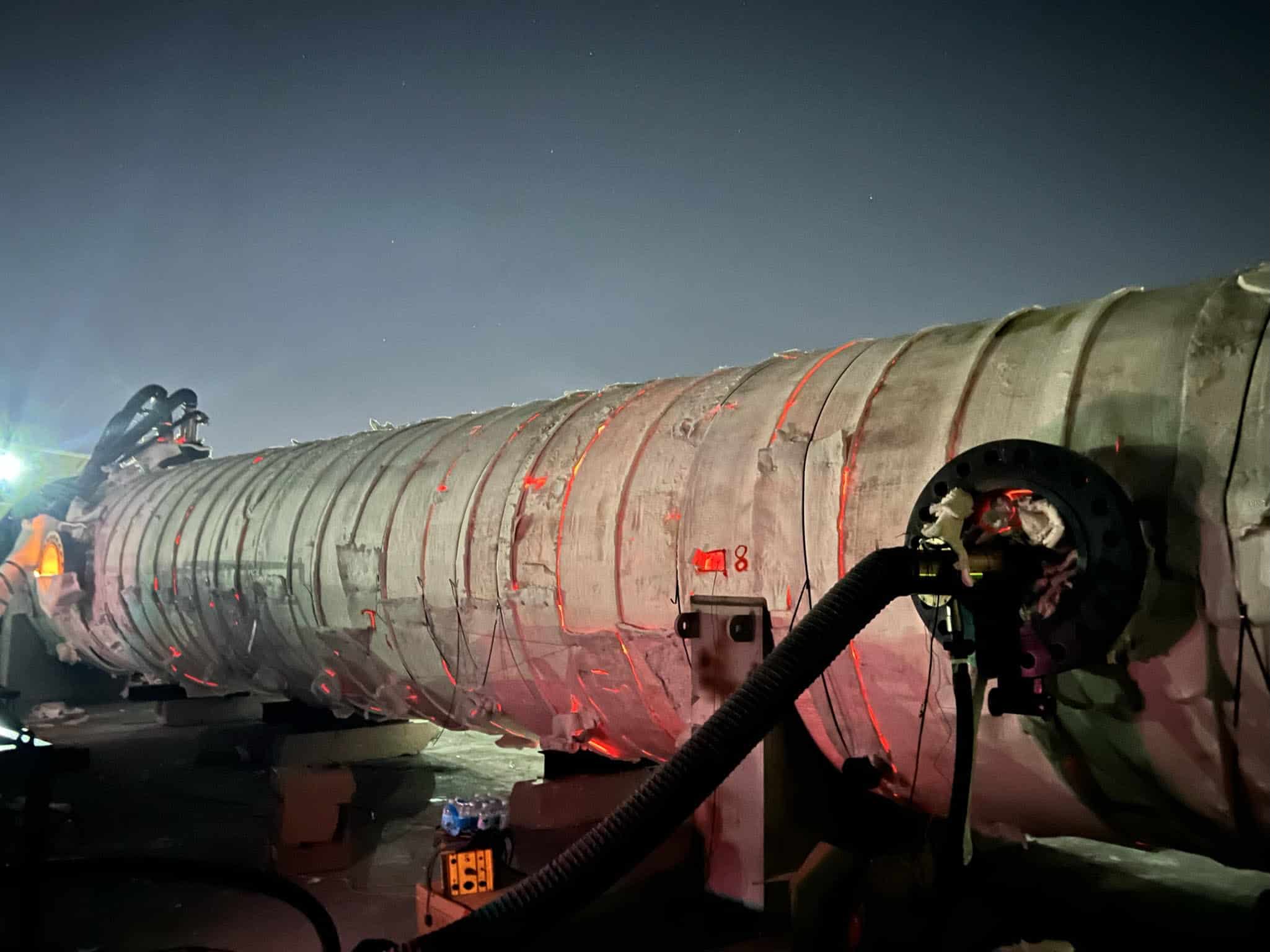
The Vessel Keeps Its Own Record
Every PWHT job comes with documentation: a heat treat record, a strip chart recorder trace, a calibration certificate, and an execution plan. That package is your proof the work was done to spec, and it matters. But the paperwork and the work have to actually match, because the steel keeps its own account. A vessel that wasn't heated properly and uniformly will show it eventually, in distortion, in residual stress that was never relieved, or in trouble down the road, regardless of what the chart says on the day.
This is the part buyers can't fully verify on their own, and it's the reason experience matters more than the documentation alone. A contractor who genuinely knows the work produces clean documentation because the job was clean, not the other way around. The way you protect yourself on the part you can't see is by working with people whose competence you can trust on the part you can.
Why This Is the Wrong Step to Get Wrong
PWHT comes late in fabrication, after the welding it's meant to relieve. By the time heat treatment happens, the vessel is nearly finished. That timing is exactly what makes a failure so expensive.
The first cost is the vessel itself. Improper ramp rates, uneven heat, or an out-of-tolerance temperature spread can distort or warp the vessel, or leave residual stress unrelieved, which defeats the entire purpose of the treatment and can compromise weld integrity in service.
The second cost is everything built on top of the problem. Because the failure surfaces late, the fix isn't a simple redo. It can mean going backward through finished work: cutting out and replacing sections, re-welding, re-treating, re-hydrotesting, repainting, sometimes shipping the vessel twice. A problem introduced near the finish line can send the whole thing back to the shop floor. The heat treatment that looked like the affordable option at bid time can turn into one of the most expensive line items in the project.
Estimator's Resource
On-Site PWHT vs. Off-Site Furnace — Full Cost Breakdown
Furnace quotes leave out transport, permits, rigging, and the return trip. Before you sign a purchase order, see every line item most fabricators don't price in until it's too late.
Read the Full Comparison →The third cost is the one that's hardest to put a number on. As a fabricator, your reputation rides on delivering a sound vessel to your own customer. A PWHT failure doesn't stay your contractor's problem. It becomes your problem, in front of the client whose trust you've spent years earning.
What Actually Protects You: Specialization
Since 2014, more than 90 percent of our revenue has come from one thing: on-site PWHT on pressure vessels, using direct gas fire combustion. Not as a service we offer on the side. As the work we do, nearly to the exclusion of everything else. Gulf Coast Combustion was built around large vessel heat treating, and more than a decade of doing almost only that is where the field judgment comes from.
That focus is the whole point. A specialist has run enough vessels, in enough conditions, to know what right looks like and what a given vessel needs before the first burner lights. When you work with us, the owner is your point of contact and the technical authority behind the job. The person accountable for how your vessel is treated is the person who built this company doing exactly this work.
The clients who have been with us longest did not get there by re-shopping every job. Here is what a decade with the same client actually looks like, and why the best fabricators don't switch heat treating vendors every year.
As Featured In
The Fabricator — North America's Leading Metal Fabricating Publication
James Benefield wrote the Welding Strategy article in the August 2026 issue: heat treating large pressure vessels where they sit. Four PWHT methods, what actually happens inside the steel, and the point where a furnace stops being an option.
Read the Article
Thermal Processing Magazine — The Industry's Leading Heat Treating Publication
James Benefield wrote the technical article the industry needed someone to write: what on-site direct gas fire PWHT actually requires to get right.
Read the Technical Article
There are plenty of legitimate reasons a contractor gets chosen for a job, from timing to an existing relationship, and any of them can be reasonable. On this particular step, it's worth making sure genuine specialization is part of the decision, because this is the step where it matters most.
And It Doesn't Have to Cost More
Specialization doesn't mean paying a premium. Doing PWHT on-site, right where the vessel sits, often costs less than the alternative, because you're not paying to transport a finished vessel to a fixed furnace and back, with all the handling and schedule risk that trip carries. For large vessels especially, on-site is frequently the more economical option and the safer one at the same time. The right contractor isn't the expensive choice you make to avoid trouble. Often it's the choice that protects your vessel and your budget both.
On-Site PWHT Pricing
See What Your Job Costs — Instantly.
Enter your vessel specs and get a budgetary estimate in seconds — built from GCC's actual job data. No email required.
Try the Free Calculator →Questions Worth Asking Before You Award a Job
If you're evaluating a contractor for a vessel, a few direct questions tell you most of what you need to know: how much experience do they have with vessels like yours, how do they handle thermocouple placement, who is actually accountable for the job, and what does their documentation package include. We put the full list together in a separate guide: 5 Questions to Ask Before You Hire a Mobile Heat Treating Contractor.
For the code that governs pressure vessel PWHT, see ASME Section VIII Division 1.
Ready to Get Started?
Talk to James About Your Next Project
Call or text the owner directly at 832-797-3428 — or reach the office at 713-425-3773.