
ChemLINE heat cure isn’t a passive process. High-performance coating systems like ChemLINE require a controlled temperature ramp to a substrate temperature of 250°F, held for several hours, then a controlled step-down — before the lining is considered fully cured and ready for service. Gulf Coast Combustion performs that cure on-site, at your facility, with full documentation.
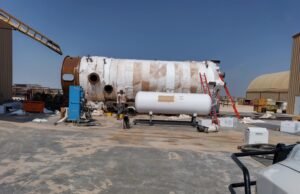
Gulf Coast Combustion mobilized to a major food processing facility in California to perform a ChemLINE heat cure (CL250) on four vertical tomato paste storage tanks — 20 feet in diameter, 20-foot shell, dished heads, and cone bottoms. The first two tanks are complete. The remaining two are scheduled for a second mobilization.

Why Isn’t Ambient Cure the Right Answer for Food-Grade Tank Linings?
ChemLINE and similar high-performance coating systems can cure at ambient temperature — but it takes 5 to 14 days and the result isn’t the same. Ambient cure produces a softer film with lower chemical resistance than a properly heat-cured lining. For tanks storing food products, caustic cleaning chemicals, or aggressive process fluids, that difference matters.
Heat cure accelerates and completes the cross-linking reaction in the coating. The result is a fully developed, chemically resistant film that performs the way the coating manufacturer intended — not a film that’s still developing weeks after the tank goes back into service.
For a food processing facility running on a tight turnaround, the math is straightforward. A 10.5-hour heat cure cycle gets the tank back in service the same day. A 14-day ambient cure does not.
How Does the ChemLINE Heat Cure Work at 250°F?
The Advanced Polymer Coatings cure schedule for ChemLINE specifies substrate temperature — not air temperature. That distinction matters. GCC monitors the steel surface directly using thermocouples, not the air inside the tank. Every step in the ramp is based on what the steel is actually doing.
| Time | Substrate Temp (°F) | Step Change (°F) |
|---|---|---|
| Initial | 75°F | — |
| 0.5 hr | 100°F | +25°F |
| 1.5 hr | 150°F | +50°F |
| 2.5 hr | 200°F | +50°F |
| 3.5 hr | 250°F | +50°F |
| 4.5 – 8.5 hr | 250°F (hold) | 0°F |
| 10.5 hr | 200°F | -50°F |
| Heat source off — cool to ambient naturally | ||
ChemLINE Heat Cure schedule per Advanced Polymer Coatings CL250 Cure Rev. 1.0. Lowest substrate temperature: 250°F. Highest substrate temperature: 350°F. All temperatures are substrate temperature.
Watch the full on-site cure — including the drive up the California coast through Big Sur and the Grand Canyon on the way home.

How Does Gulf Coast Combustion Run a Tank Lining Heat Cure?
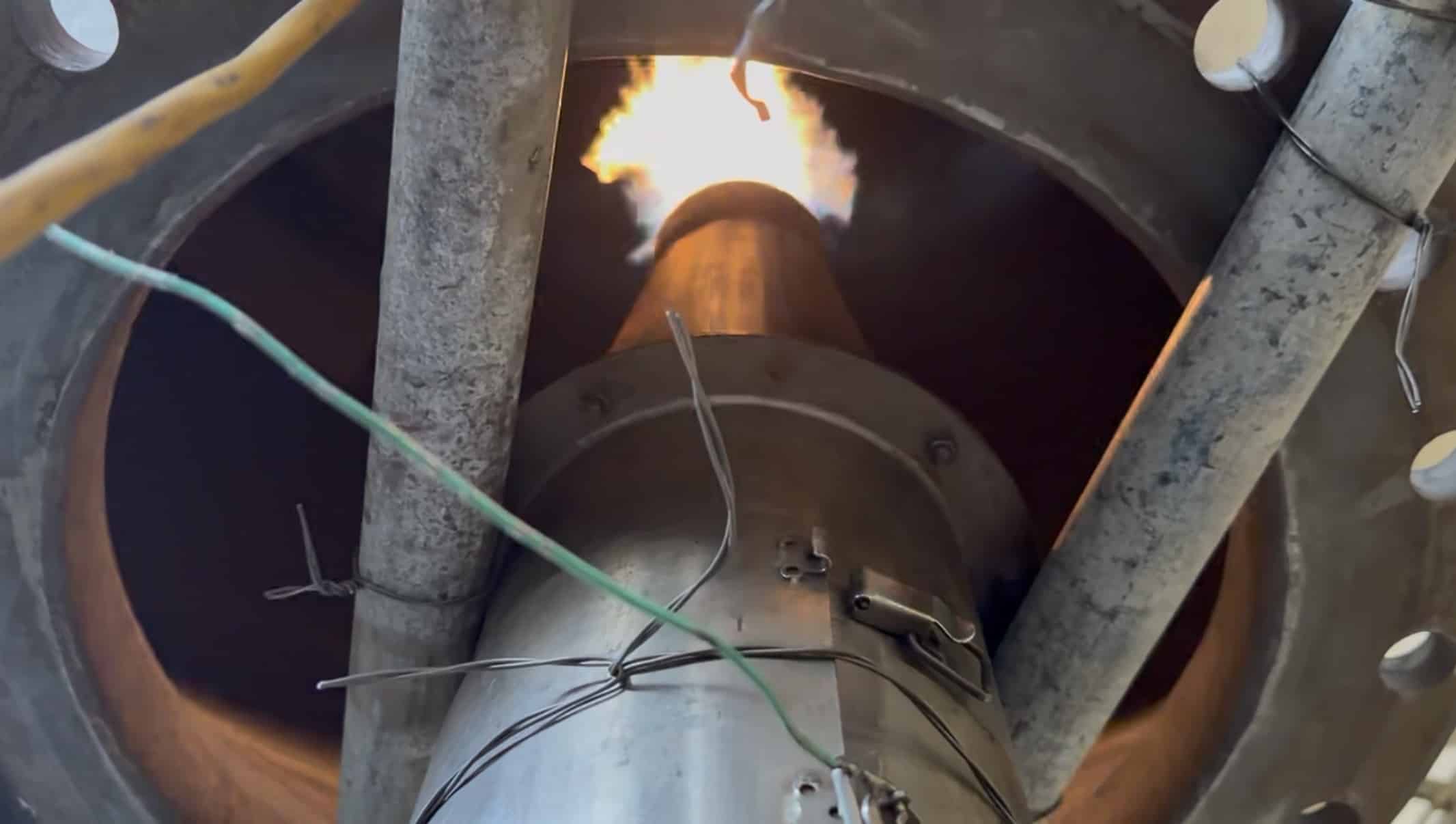
GCC introduces heat through the tank manway using a direct gas fire burner — firing up into the tank interior from below, distributing heat through the vessel. Thermocouples monitor substrate temperature throughout the cycle. The temperature controller manages the ramp rate automatically, and the strip chart recorder captures the full time-temperature profile from start to finish.
For the California job, GCC ran two tanks back-to-back per mobilization — four tanks total across two visits. The back-to-back approach keeps the facility on schedule and eliminates the cost and logistics of multiple separate mobilizations for tanks that are ready at the same time.
Before GCC leaves the facility, the coating applicator or facility manager receives a complete cure record — time, temperature ramp, hold duration, and equipment calibration certificate. The documentation confirms the cure was performed to manufacturer specs and gives the facility a traceable record for their QC file.
Who Calls Gulf Coast Combustion for a Tank Lining Heat Cure?
Coating applicators working with heat-cure specified systems call GCC when the job requires a controlled heat source and documentation the facility will accept. Bringing in a specialist keeps the applicator on schedule and off the hook for providing equipment they don’t own or operate.
Facility maintenance managers call when a tank lining is due for replacement or repair and they need the cure executed on a timeline that works for production — not a 14-day ambient cure window that holds up the whole schedule.
GCC mobilizes anywhere in the U.S. for tank lining heat cure work. The equipment travels, the documentation is consistent, and the cure is performed to manufacturer specifications every time. For more on what the service covers and which coating systems GCC works with, see the Tank Lining Heat Cure service page.
Tank lining heat cure is one of several on-site heat treating services Gulf Coast Combustion performs at your facility. For pressure vessel PWHT, refractory dry outs, and localized heat treating, see the full services page.
Related Resources
- Tank Lining Heat Cure — Service Page
- Pressure Vessel Heat Treating
- The Fabricator’s Complete Guide to Pressure Vessel PWHT
- ASME Section VIII Division 1
Ready to Get Started?
Talk to James About Your Next Project
Call or text the owner directly at 832-797-3428 — or reach the office at 713-425-3773.