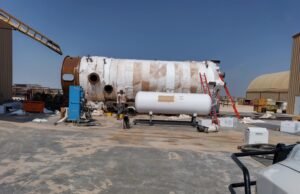

How Long Does On-Site PWHT Take: 3 Shifts
On-site PWHT isn’t one continuous operation. It runs in 3 shifts with a cooling window in between, and understanding how they work helps you plan around us.As Featured In
Thermal Processing Magazine — The Industry’s Leading Heat Treating Publication
Gulf Coast Combustion owner James Benefield breaks down the execution standards behind every large vessel PWHT job — written execution plan, thermocouple placement, heat cycle calculations, and full documentation.
Read the Technical Article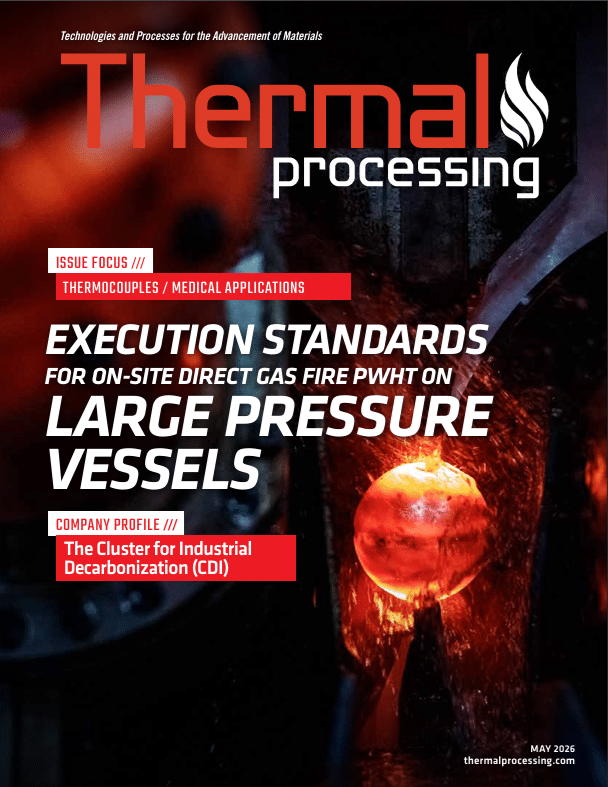
Shift 1 — Wrap (8 to 12 hours)
This is setup. We arrive, stage equipment, attach thermocouples, wrap the vessel in insulation, and install the burners. On a straightforward job where the vessel is positioned and ready, this shift runs 8 to 12 hours. Larger vessels take longer — more surface to cover, more thermocouples to place, more to get right before we fire anything. Everything needs to be ready before we start. Welding complete, vessel in final position, manways accessible and oriented correctly for burner insertion. If the vessel still has active welding going on, we can work around minor finishing items — but hours of active weld work means we’re standing by, and standby charges apply. Not a crisis, just a cost worth planning around.Shift 2 — Fire and Heat Cycle (8 to 14 hours)
This is the PWHT itself. We fire the burners, bring the vessel up to temperature at a controlled rate, hold soak temperature for the required time, and manage the controlled cooldown — all per the execution plan built specifically for your vessel. This shift runs 8 to 14 hours depending on wall thickness, vessel length and diameter, number of burners, and required soak time. Per ASME Section VIII Division 1, heat-up and cool-down rates are calculated based on governing wall thickness — the thicker the vessel, the slower those rates must be. That’s not GCC being conservative, that’s the code. Your crew can keep working around us during this shift. We’re running the heat cycle, not shutting down your bay.See the Heat Cycle in Action
Heat distribution, soak temperature, and chart recorder — an 80-foot, 90,000 lb job walked through in real time.
Free Resource
The Fabricator’s Complete Guide to Pressure Vessel PWHT
Everything you need to know about on-site pressure vessel PWHT — code requirements, execution standards, heat-up and cool-down rates, thermocouple placement, and how to evaluate a heat treating contractor. Written by the people who do more of this work per year than anyone else in the U.S.
Read the Full GuideCooling — Between Shifts (approximately 8 hours)
After the heat cycle, the burners go off but the blowers keep running. They’re actively moving air through the vessel to dissipate heat — without them, cooling slows significantly. This window runs approximately 8 hours depending on wall thickness, vessel length, and diameter. Thick walls hold heat longer. Larger vessels take more time. We’re typically not on your floor during this window. If the heat cycle finishes late at night, cooling runs overnight and we’re back in the morning. During this unmanned period, please don’t cut power or touch our equipment without contacting us first — the blowers need to run uninterrupted to keep cooling on schedule.Shift 3 — Unwrap and Pack Out (typically under 8 hours)
We come back, strip the insulation, pull thermocouples, break down equipment, and we’re gone. The documentation package — heat treatment record, strip chart recorder trace, calibration certificates — is in your hands before we leave the job site.On-Site PWHT Pricing
See What Your Job Costs — Instantly.
Enter your vessel specs and get a budgetary estimate in seconds — built from GCC’s actual job data. No email required.
Try the Free Calculator →What Makes It Take Longer
Wall thickness, vessel length, diameter, and thermocouple count are the variables that compound each other on large jobs. A thick-walled vessel heats and cools more slowly by code. A vessel with significant length and girth takes more time to bring to uniform temperature and requires more thermocouples to monitor correctly. Getting all those readings within the required parameters before soak begins takes time. None of this is a surprise if you share your vessel specs when you call. We build a detailed execution plan for every job before we show up — burner assignment, thermocouple placement, heat-up and cool-down rates, soak time. You see the plan before we fire anything. Learn more about what GCC’s on-site PWHT services include.Your Floor Stays Yours
GCC works around active fabrication at every stage — wrapping, firing, cooling, unwrapping. Your crew doesn’t stop because we’re there. We need clear access to the vessel and we need our equipment left alone. Everything else on your floor keeps moving. That’s a meaningful difference from shipping a vessel to an outside furnace, where your bay sits empty waiting for a vessel that’s in transit, in a queue, being treated, and in transit again — all on someone else’s schedule. With fuel where it is right now, that round trip isn’t cheap either. For fabricators in the Houston area and across the Gulf Coast, Gulf Coast Combustion mobilizes directly to your facility — no freight exposure on a finished vessel. If you’re weighing on-site PWHT against shipping to a furnace, here’s a full breakdown of what that decision actually costs you.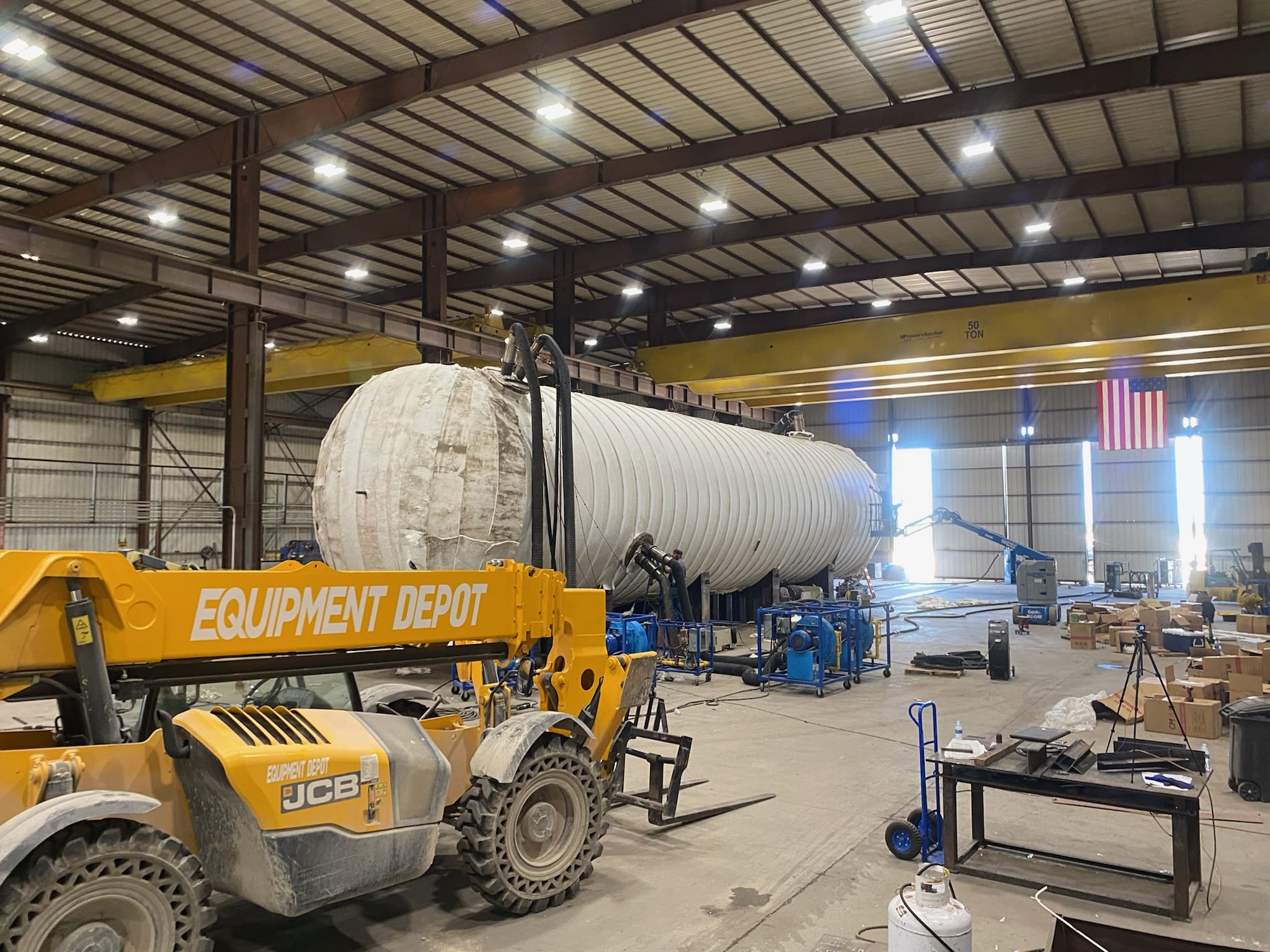
Repeat Customers Run Tighter
The fabricators who’ve worked with GCC for years run the smoothest jobs. They know how to position the vessel. They know when to have welding wrapped up. They know how we work and we know how they work. Pre-job conversations are shorter because there’s nothing to explain for the first time. If you’re a new customer, that’s fine — we’ll walk you through everything. But if you’re thinking about a long-term heat treating relationship, that knowledge compounds with every job that follows.Ready to Get Started?
Talk to James About Your Next Project
Call or text the owner directly at 832-797-3428 — or reach the office at 713-425-3773.